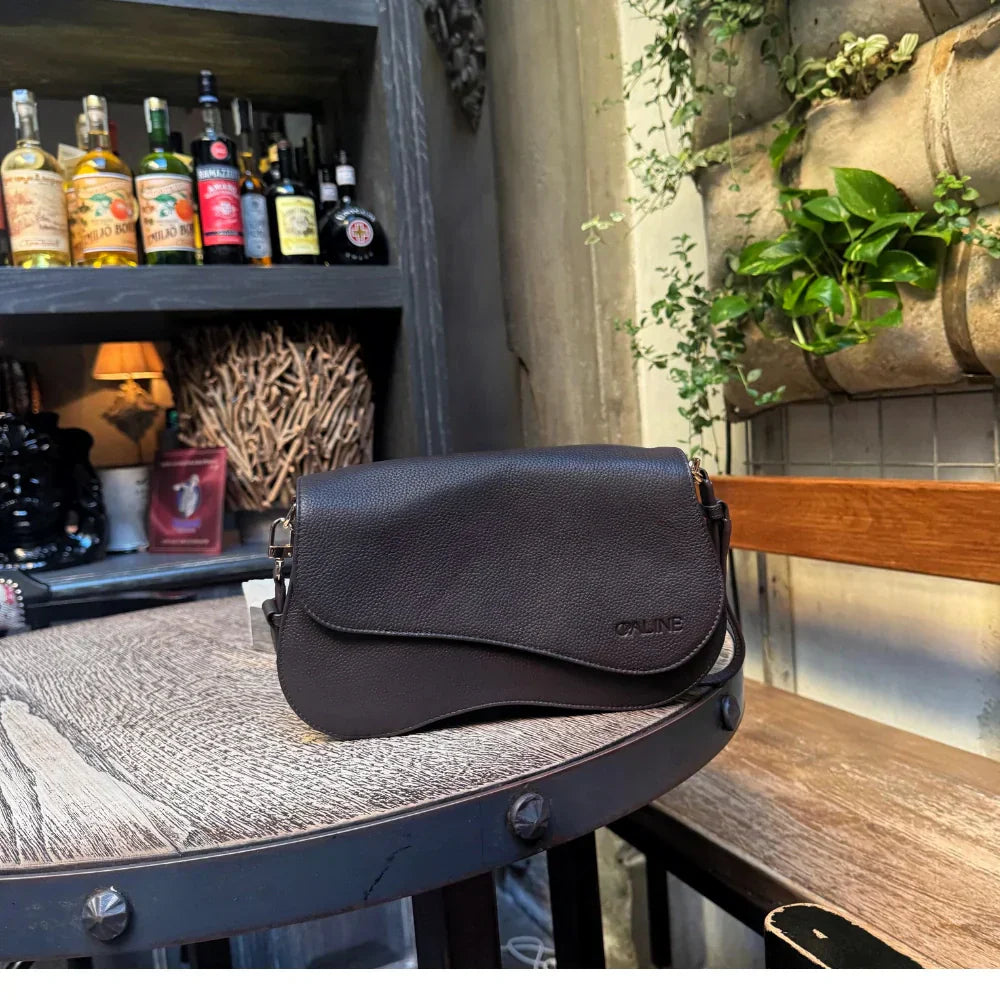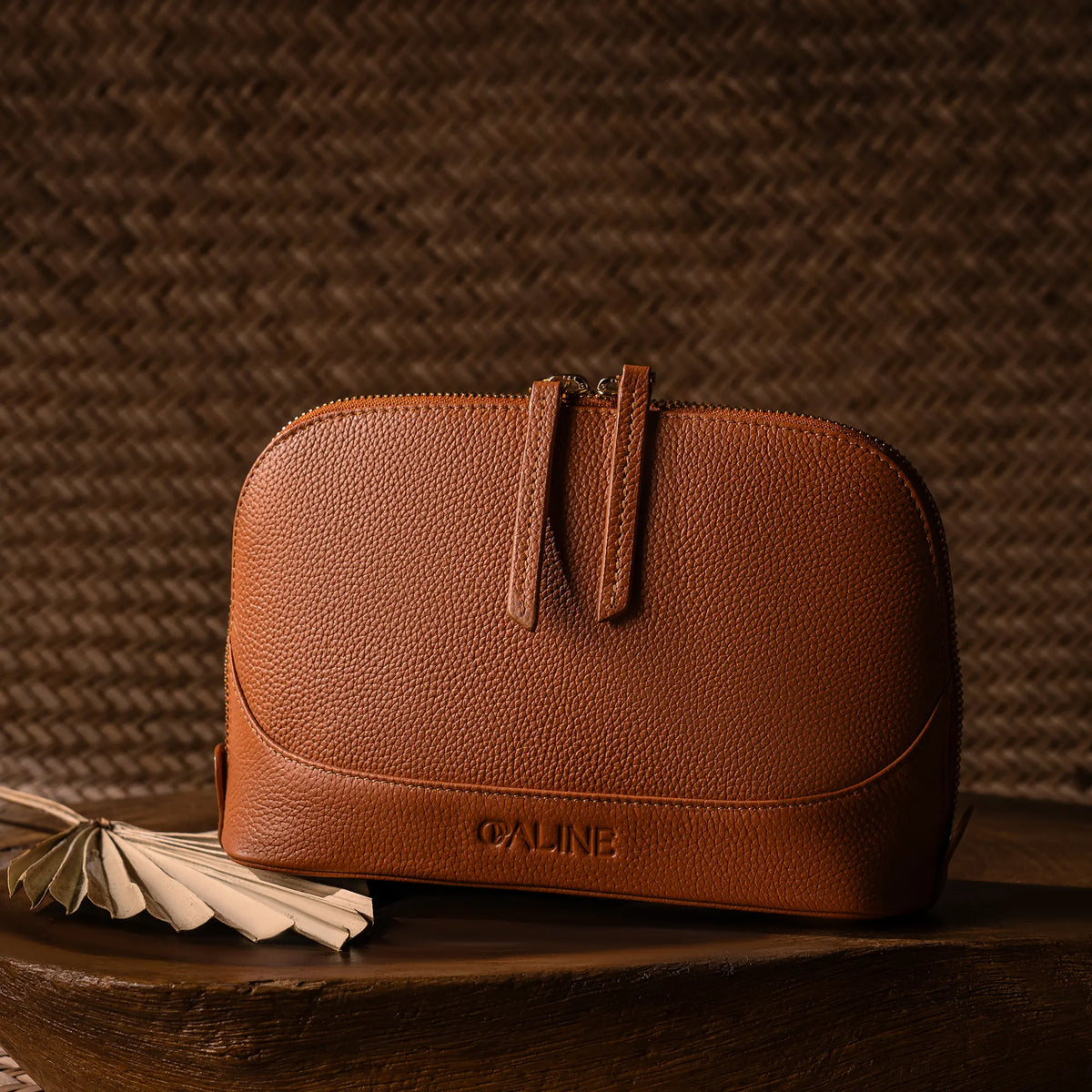
From Tannery to Tote: The craftsmanship behind our full-grain leather bags
Most of us have never thought to ask what our handbag is made of. Not really . We've admired the colour, felt the weight in our hands, and studied the shape and size. But the questions that matter most rarely make it past the shop floor. Where did this leather begin? Who touched it before it became a bag? What did it survive to get here? At Opaline, those questions are the starting point.
The handbag industry has a transparency problem. Brands speak fluently about design heritage and seasonal palettes, but they go quiet when customers ask about leather grades, tanning origins, or finishing processes. Part of this is because brands genuinely cannot answer, because they don't know either. Supply chains are long, accountability is thin, and the customer, dazzled by a beautiful object, rarely pushes back.
That opacity is precisely what Opaline’s full grain leather handbags were built to challenge.
It Begins at the Tannery

Before a bag is a bag, it is a hide. And before it is a hide worth working with, it has survived one of the most rigorous sorting processes in manufacturing. Cowhide is the most widely used leather in the accessories industry, a natural by-product of the meat supply chain. But not all cowhide is equal; not even close. After the tanning process, which transforms raw hides into durable, workable leather, skins are manually sorted into quality tiers based on surface appearance: the presence of scars, insect bites, processing marks, and natural irregularities that accumulate across an animal's lifetime.
Only the top tier of these sorted hides, what the industry calls full-grain leather, retains the outermost layer of the skin entirely intact. It has not been sanded, buffed, or corrected. The natural grain is preserved in full.
Full-grain leather is the most structurally dense, the most durable, and the most honest expression of the material. It also happens to be the most difficult to obtain, because any surface imperfection is visible, unforgiven, unremedied. Brands that choose full-grain leather are making a commitment: to quality.
Quality Check One: Leather Quality
The first and most foundational of Opaline's quality checkpoints happens before a single stitch is placed. Every batch of incoming leather is evaluated against a precise set of criteria: surface consistency, fibre density, temper, and finish integrity. The hide must pass visual inspection by trained leather artisans who know, from experience and instinct, what full-grain leather in its best form looks and feels like.
What they are looking for, and looking out for, is the difference between leather that will age into something beautiful and leather that will degrade into something disappointing. Full-grain leather, handled correctly, develops a patina over time, a depth of character that cannot be manufactured or replicated. It absorbs the life of its owner. Top-grain leather, the grade below, starts out similar but has been buffed to remove surface irregularities, a process that also removes the tightest, most durable fibres. Split leather — what is sometimes sold under the vague, misleading label of " genuine leather " — is the fibrous underside of the hide, frequently coated in polyurethane and grain-embossed to pass as something it is not.
Opaline uses none of the latter two. The leather quality check is the gate through which no compromise passes.

Quality Check Two: The Flex Test - 50,000 Cycles
A handbag is picked up and put down, stuffed and emptied, squashed into overhead compartments, hung on chair backs, carried through rain. The points where stress concentrates such as handles, gussets, corners, strap attachments are where lesser bags begin to fail. That slow, dispiriting split at the fold that tells you the leather was never really up to the task.
Opaline subjects every leather style to a mechanical flex test of 50,000 cycles before it is approved for production. The test simulates the repeated bending and flexing a bag panel undergoes across its working life. The leather must emerge without cracking, without surface breakdown, without structural compromise of any kind.
This is the kind of testing that separates bags built for longevity from those built for a season. It is also, frankly, the kind of testing that most brands skip entirely, because it is expensive, time-consuming, and occasionally humbling. Leather that looks beautiful in the showroom does not always survive 50,000 bends. The ones that do earn their place in an Opaline bag .

Quality Check Three: Pull Strength
The seams of a handbag are, in a literal sense, what holds everything together. They are also the detail most easily overlooked by a customer and most easily compromised by a manufacturer under cost pressure. Thread grade, stitch density, seam allowance, and the tensile strength of the leather at the attachment point all contribute to how a bag holds under load.
Opaline's pull strength testing applies measured, calibrated force to seams, handles, and strap attachments to verify that each junction meets a defined minimum threshold. The test is mechanical and objective — there is no subjectivity in a load cell reading. Either the seam holds, or it does not.
Handle attachment points receive particular scrutiny. A bag carried at full load including a laptop, water bottle, wallet, and the accumulated weight of a working day places significant repeated stress on the points where handle meets body. Opaline's standards require the handbag to withstand forces well beyond what normal use would demand, because normal use has a way of becoming abnormal use, and a bag should be able to accommodate both without complaint.
Quality Check Four: Dyeing and Anti-Fungal Finishing

Colour is where leather's chemistry becomes most complex, and most consequential. The dyeing process penetrates the leather fibre, and the quality of that penetration determines not just how a bag looks on the day of purchase, but how it looks two, five, ten years later. Poorly dyed leather fades unevenly, transfers colour onto clothing, and reacts badly to moisture. Well-dyed leather holds its depth, ages gracefully, and remains stable across the conditions it encounters in daily life.
Opaline's dyeing process is verified for both colour fastness and evenness of penetration. The leather is tested against light exposure and friction to confirm that the colour is fixed into the fibre, not merely sitting on its surface.
Beyond colour, every Opaline leather is finished with an anti-fungal treatment, a detail that speaks directly to the realities of how bags are used and stored. Leather is a natural material, and in humid conditions, untreated hides are susceptible to mould and mildew, particularly on internal surfaces and in storage. The anti-fungal finishing applied to Opaline leather is tested to inhibit microbial growth across a defined range of conditions. It is not a visible finish. It does not alter the hand feel or the patina development of the leather. It is, simply, a layer of protection that extends the bag's quality of life — invisibly, reliably, over time.
Quality Check Five: Lead-Free Fittings
The hardware on a bag is its punctuation. Clasps, D-rings, feet, zip pulls, buckles — these are the details that catch light, take wear, and signal quality from across a room. They are also, less visibly, a potential source of harm. Certain metal alloys used in fashion hardware contain lead, a heavy metal with well-documented health consequences, particularly relevant given how often hardware comes into skin contact through the course of daily use.
Opaline's fittings are certified lead-free, verified through third-party testing against international safety standards. This is not an unusual standard in regulated markets, but it is one that brands frequently do not volunteer, and that customers rarely know to ask about.
Beyond safety, lead-free alloys tend to be more stable over time: less prone to the surface degradation, discolouration, and pitting that accelerates in cheaper hardware. The fittings on an Opaline bag are designed to look as good in five years as they do on day one.

The Sum of Its Standards
Most bags are sold on the colour, silhouette, the way it looks on your shoulder in the mirror. But what you can’t see is where the quality holds up or falls apart. The leather grade, the seam load, the dye chemistry are all important markers of quality. .
At Opaline, from the tannery to the tote, every decision has been made with a single underlying premise: that a bag built to last should be tested to prove it. Full-grain leather is not a label but a commitment. The customer who invests in quality deserves to know, precisely and honestly, what that quality consists of.
The bag you carry is the sum of five quality checks. Good materials, properly tested, speak for themselves. Everything else is just marketing.