

Rainy day essentials: Caring for your designer leather bag during the monsoons
There’s a dread that sets in the moment the sky turns grey and you're standing at the door with your favourite leather bag slung over your shoulder. You've spent good money on it. You've deliberated over the colour, shape and size. Now the clouds are making you second-guess every single one of those decisions.
Most of that worry is unwarranted. Leather has been around for centuries, and as Simon Neifer , Head of Sales and Application Leather says, it’s been durable for decades . It has survived far worse than a Mumbai downpour or a Bangalore drizzle that refuses to commit.
So before you relegate your most beautiful bag to the top shelf for four months, let's talk about what the monsoon does to leather, what it doesn't, and the small, sensible care tips that make all the difference.
Will the monsoons ruin my full grain leather bag?
It’s a fair question. Four months of relentless humidity, unexpected downpours, and the general wetness of an Indian monsoon isn’t a trivial thing to put a good handbag through.
But the concern is often larger than the real risk. Full grain leather does not dissolve in rain, peel in humidity (like bonded leather or PU does). What it does do, if left completely uncared for through an entire season, is show watermarks, or mold if the bag was stored damp. The quality of hardware used on your leather bag is equally important, because cheap, poor quality hardware will soon tarnish.
The difference between a bag that comes out of the monsoon season looking worn-in and beautiful versus one that looks unattended to is just a handful of small habits applied consistently.
 Full grain leather laptop sleeve for office
Leather handbag care tip #1: Condition your handbag before the first cloud appears

Tote handbags for office: Emore tote in Deep Wine
Most leather care happens reactively, after you notice a watermark or the surface seems dull and tired. The more effective approach is a seasonal one, and it starts before the rains arrive.
A good leather conditioner applied at the beginning of the monsoon season replenishes the natural oils in the hide, keeping the leather supple, and it creates a moisture barrier that makes subsequent rain exposure far less consequential. Think of it as sunscreen logic: you apply it before exposure.
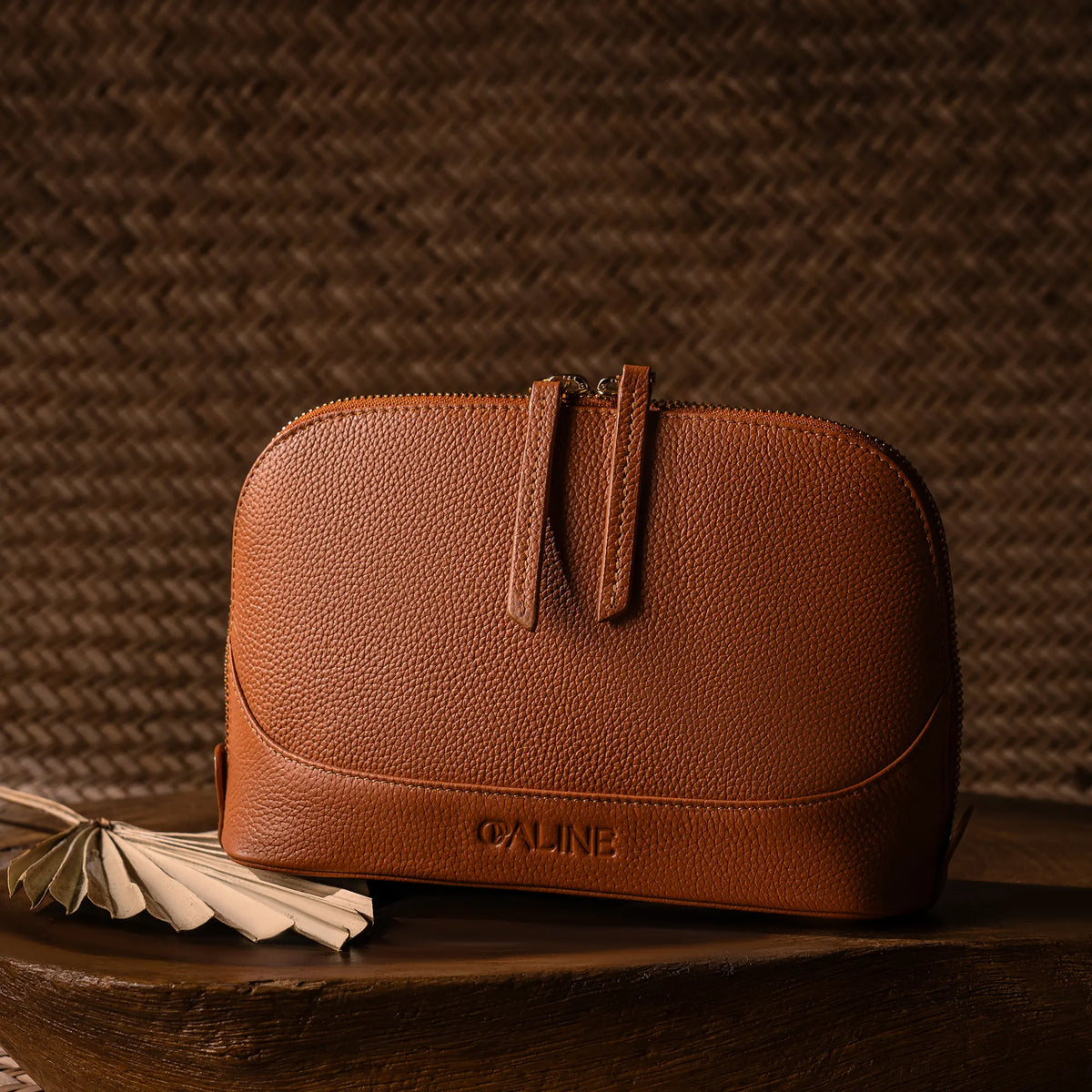
Follow the conditioner with a leather protector spray. A light, even coat across the exterior adds a degree of water resistance without altering the texture or finish. Pebbled leather, which has a textured surface rather than a smooth one, already has a minor practical advantage here. Water tends to bead on the surface rather than sit flat, which buys you extra time before any real intervention is needed.
The Emore Tote and Duo Laptop Sleeve from Opaline are both built in Opaline's signature pebbled leather for exactly this reason. At first glance, it looks purely like an aesthetic choice but it’s built to be truly functional. Reapply the protector spray every few weeks through the heaviest months, and you've done most of the work the season demands.
Leather handbag care tip #2: Wipe down before you walk in
Keep a soft, dry cloth in an accessible pocket. The slip pocket at the back of the Match Pickleball Bag works perfectly for this. After any exposure to rain, wipe the surface down before the moisture has had time to settle
The Lumen Daypack is worth mentioning here as an example of a bag designed for exactly this kind of active, outdoor use. Crafted in full-grain pebbled leather, with corrosion-resistant gold-toned hardware, and a water-resistant lining, it was built for movement and the elements, which in India means a heavy monsoon season.

Lumen Daypack in Ivory & Deep wine Full-Grain Leather
Leather handbag care tip #3: Let it dry naturally and properly
If your bag does get caught in a downpour, resist the instinct to fix it quickly. Direct heat via hairdryers, radiators,or even leaving it on a sunny windowsill causes leather to stiffen and eventually crack. The damage from overcorrecting is often worse than the original exposure.
Instead, wipe off surface moisture with a soft cloth, stuff the bag lightly with tissue paper or a bag insert to help it hold its shape as it dries, and leave it somewhere with good airflow.
Unzip it or leave the flap open and let it breathe. Most leather bags recover completely from rain exposure if this step is handled correctly.
The Emore Tote's full-zip closure is a strong asset in the rain: nothing gets in that you don't want getting in, but once you're home, open it up. A zipped bag with residual moisture inside is the setup for the monsoon's more persistent threat.

Leather handbag care tip #4: Store with airflow, not in a dustbag
Mold and mildew are the monsoon's real danger, and they thrive in exactly the conditions most of us store our handbags: a sealed dustbag, a closed cupboard, a warm and poorly ventilated room. Left damp in those conditions, even the best leather handbag for women will develop the kind of damage that's genuinely difficult to reverse.
The fix is simple but counterintuitive. During the monsoons, your leather bags are better off stored somewhere open and airy than wrapped away for protection. A cupboard with the door left slightly ajar, a shelf with circulation, a hanging hook that keeps the bag off a damp floor; all of these serve the leather better than the instinct to seal it away from the humidity.
If you're rotating between bags and one isn't being used for a stretch, stuff it to maintain its structure, keep it somewhere breathable, and check on it occasionally. Ten minutes of attention spread across a week is all it takes for a bag you intend to carry for a decade.

Leather handbag care tip #5: Watch the hardware
Okay, this care tip isn’t primarily about the leather but the hardware that is a part of your handbag. It's also a detail most people overlook until it's too late. Cheaper metal fittings tarnish and rust in humid conditions, and the damage doesn't stay contained to the hardware. Rust and tarnish leach into the leather around clasps, rings, and zip pulls, leaving stains that are difficult to treat later.
It's worth knowing what your hardware is made of before the season starts. Opaline uses corrosion-resistant gold-toned hardware across its bags for this reason. It seems insignificant but when the third monsoon passes and your hardware still looks as polished as it did on day one, the value adds up. If your bag is from another brand, a thin layer of clear nail polish on metal fittings before the season starts can offer some protection.


The case for not switching to vegan leather
Every monsoon, the same old worn advice circulates: swap your leather bags for vegan leather alternatives. The argument is that they’re waterproof, practical, and won't get damaged in the rain. It sounds reasonable until you've actually owned a vegan leather bag through a few seasons.
Vegan leather, whether PU-coated or bonded, does not handle humidity the way genuine leather does. It doesn't breathe, and moisture gets trapped against the surface rather than being absorbed and released naturally, which accelerates peeling and cracking from the inside out. The very quality that makes it seem rain-friendly in the short term is what causes it to deteriorate faster.
Full-grain leather handbags by contrast, respond to its environment. It absorbs a little, releases a little, and with basic conditioning, remains stable through years of seasonal changes. The Duo Laptop Sleeve is a perfect choice for the monsoons to protect your work laptop. Its slim, minimal, pebbled leather design can house laptops up to 14 inches. Carry it through the rains, wipe it down when you get in, condition it at the end of the season. It will look better for the use than it ever would for the storage.
Vegan leather is not the safer choice in the monsoons. It's just the more replaceable one.

